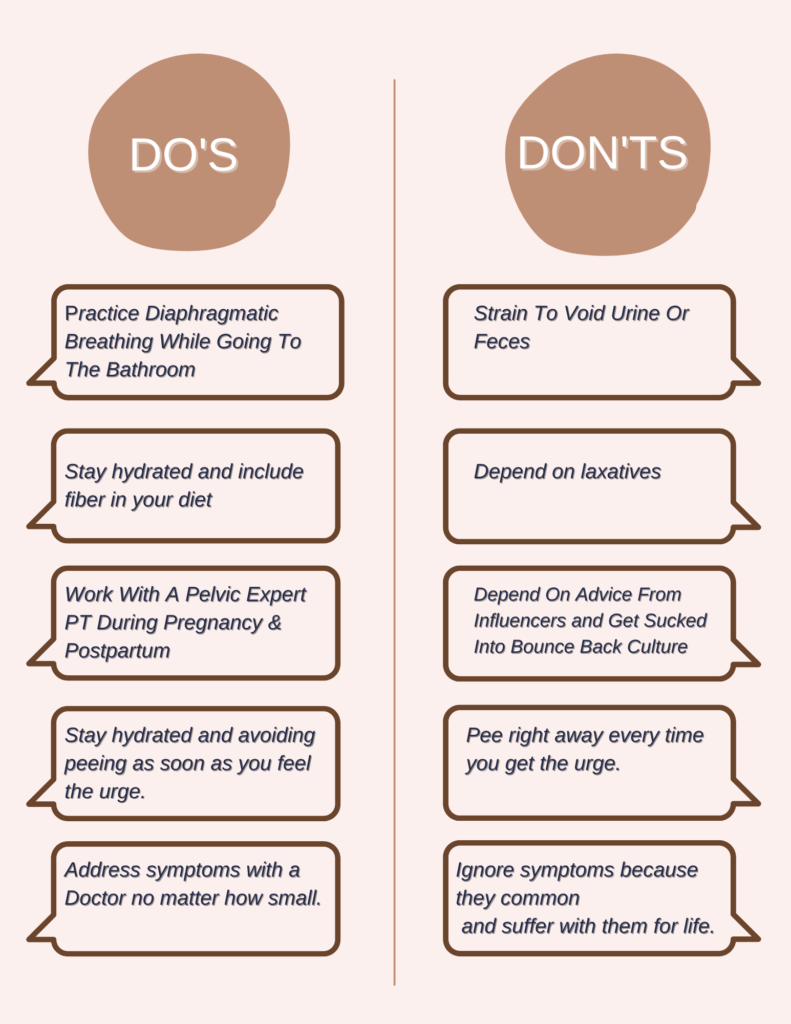
Do practice diaphragmatic breathing, while going to the bathroom. Don’t strain to void urine or feces. Why? Because our core system is a perfectly pressurized system. By straining that system you can move the organs out of place and that can lead to a pelvic organ prolapse or hemorrhoid.
Do stay hydrated and include fiber in your diet. Don’t depend on laxatives. There is a rhythm in your colon and by taking laxatives you disrupt the rhythm so that your color begins to rely on the medication. If you stay hydrated and eat fibrous foods like vegetables, those aid in digestion and support the natural rhythm of the colon.
Do Work with a Pelvic Expert Physical therapist especially during pregnancy and postpartum. Don’t depend on advice from influencers and get sucked into bounce back culture. There are so many things our Pelvic Expert Physical Therapists can help you with during pregnancy to prepare for birth and so much they can do to help you heal postpartum. None of that will include cutting out carbs, getting back to HITT workouts as soon as you’re “cleared at 6 weeks” or waist trainers.
Do stay hydrated and avoid peeing as soon as you feel the urge.
Don’t pee “just in case” before you leave the house or pee as soon as you feel the urge that decreases the size of your bladder. Staying hydrated reduces the acidity in the urine which will help you not have the urge as often and help increase the volume of urine the bladder can hold.
Do address symptoms with a doctor no matter how small.
Don’t ignore symptoms because they are common and suffer with them for life. The generations before us were the ones that taught us how to be moms but they also didn’t get all the support they needed postpartum. You might here that you’ll leak forever, or sex will never be the same but some of them didn’t use car seats and times change, resources change and what was normal for women who gave birth in the 1980’s is not and should not be the same standard of birthing and postpartum support in 2022. We know so much more now and issues that women in their 50’s-80’s are struggling with are directly related to pelvic floor dysfunction.
About the author
Dr. Allison Feldt, PT, DPT
Allison is a pelvic floor physical therapist and the founder of Body Motion PT in Edmonds. A mom who knows the aftermath of pregnancy and birth firsthand, she's on a mission to help women restore their core and pelvic floor at every stage of life.
Let us talk about something that gets whispered about far more than it gets addressed. The changes that happen to vaginal and pelvic tissue over the course of a life.…
If you have chronic low back pain, you have probably done the rounds. Stretching. Heat. Maybe massage, chiropractic, or a round of general physical therapy. Some of it helped for…
Women’s healthcare is evolving. For years, many women struggling with conditions like endometriosis, painful periods, C-section scar restrictions, pelvic pain, incontinence, prolapse, and postpartum core dysfunction were often told their…




 By Dr. Allison Feldt, PT, DPT